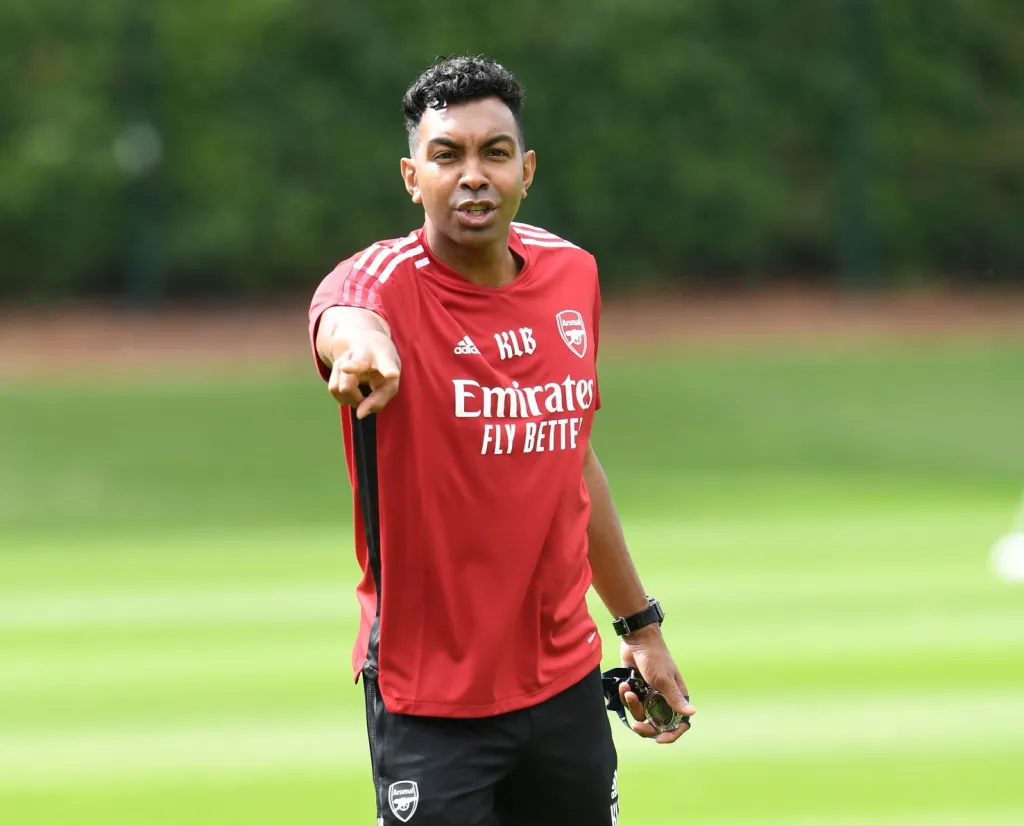
Seychelles does not need to guess what elite player development looks like. Kevin Betsy has lived it from both sides.
As a player, he reached the Premier League after an unconventional route through non-league football. As a coach, he has worked in elite youth development with Fulham, England’s national teams and Arsenal. Asked what Seychelles must do to produce better footballers, his answers repeatedly return to the same themes: start earlier, improve coaching quality, prioritise the individual over youth results, expose players to the right challenges and build a coherent pathway.
The first point is perhaps the most important: by 12 or 13, Betsy believes the foundations should already be well established.
He identifies ages six to 12 as crucial years for technical skill, ball contact and physical coordination. A talented 12-year-old can still progress to a high level, but Betsy says that player may already be competing against children elsewhere who have accumulated far more high-quality football contact.
That does not mean simply scheduling more sessions. Betsy specifically warns against confusing volume with development. High contact hours delivered through the wrong content can still fail the player.
For Seychelles, that shifts the question from ‘How often do our children train?‘ to ‘What are we actually teaching them when they train?‘
His strongest statement concerns coaching itself: “I’ve never seen good players become bad players with good coaching, but I’ve seen good players become bad players with poor coaching.”
Betsy is equally clear about youth results. Winning tournaments and matches can feel important to clubs, coaches and parents, but he argues that the real measure of a youth programme is the individual player it produces.
“No one will remember you winning youth games and tournaments, but they will remember when a player makes it as a professional footballer.”
Competition still matters. Betsy supports exposing Seychelles’ best young players to stronger opposition, but says the level has to be appropriate. If the physical or competitive gap is too large, the experience can create a false picture of potential and damage confidence rather than accelerate development.
The domestic senior game matters too. Betsy does not pretend there is a simple fix for the Seychelles Premier League. He describes raising its standard as a major project requiring a shared vision, consultation, expertise and an aligned plan.
Nor does he believe improvement is impossible while players remain largely amateur. More funding and more time to train would accelerate progress, but he says clubs can still improve through the quality of the work they do: better training, clearer tactical ideas and highly committed players.
So how should Seychelles know whether it is actually improving? Betsy points beyond isolated youth results. He would look for sustained competitiveness at national-team level, stronger performances by clubs in African competition, and younger players increasingly earning first-team minutes in the Premier League.
The encouraging part of Betsy’s message is that he does not see Seychelles’ size as a reason to accept a low ceiling. But improvement requires a system rather than isolated interventions – and the system has to be designed around developing players, not merely organising football.